
Implementing the National Education Policy (NEP) 2020 in schools involves more than introducing new subjects, changing textbooks, or adopting digital tools. It requires schools to rethink how students learn, how teachers facilitate learning, how progress is assessed, and how classroom experiences support the development of knowledge, skills, and values.
A structured approach can help schools move from policy understanding to classroom implementation. By reviewing current practices, identifying priorities, strengthening teacher capacity, aligning curriculum and assessment, and monitoring progress, schools can make NEP 2020 implementation more manageable.
Key Takeaways: Implementing NEP 2020 in Schools
- Review existing school practices, resources, and student learning needs.
- Set realistic implementation priorities based on school requirements.
- Encourage experiential and competency-based learning.
- Strengthen teacher development and inclusive classroom practices.
- Monitor progress through student learning evidence and regular reviews.
What Does NEP 2020 Implementation Mean for Schools?
NEP 2020 implementation means aligning school education with the policy’s vision of equitable, inclusive, flexible, and holistic learning. Schools need to create learning experiences that help students develop conceptual understanding, critical thinking, creativity, communication, problem-solving abilities, and practical skills.
For schools, this is a shift from focusing primarily on syllabus completion to understanding what students can learn, apply, and demonstrate.
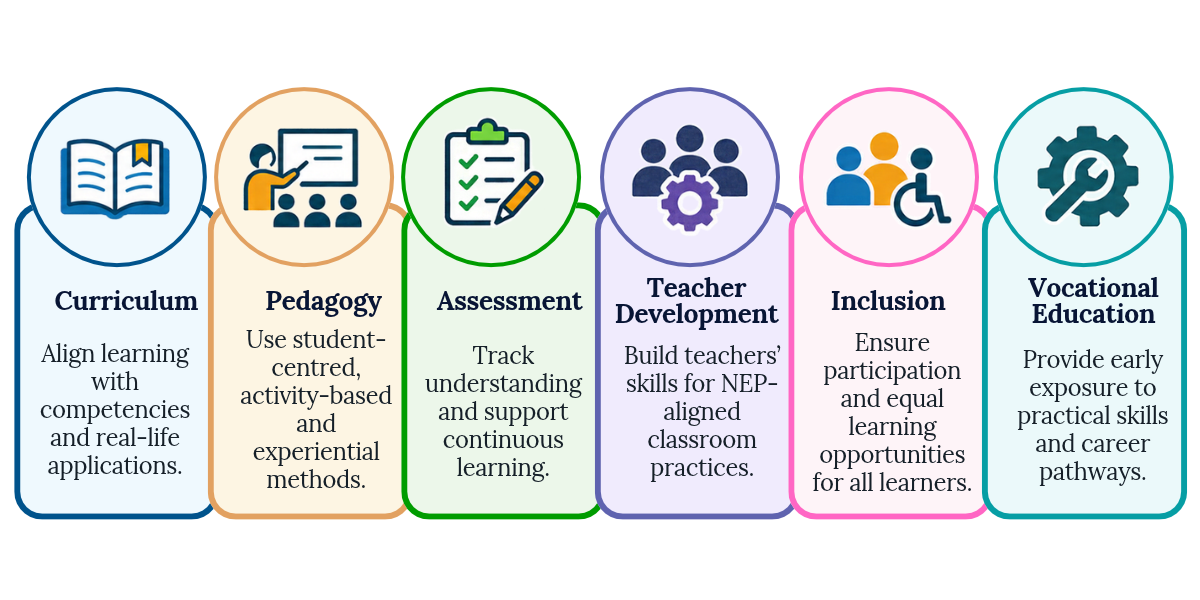
A Practical Roadmap for NEP 2020 Implementation at School Level
NEP 2020 implementation becomes easier when schools divide the process into manageable stages.
- Assess school readiness: Schools can assess their readiness by reviewing existing teaching practices, curriculum planning, assessment methods, teacher capacity, infrastructure, and student learning needs.
- Define priorities: Schools should avoid attempting to implement every reform simultaneously.
- Align curriculum: Curriculum planning should begin with the learning students are expected to achieve.
- Introduce experiential learning: Experiential learning provides students with opportunities to learn through observation, exploration, practice, discussion, and reflection.
- Strengthen assessment: Assessment should help teachers understand student learning and identify what needs to happen next.
- Develop teachers: Teacher development should be connected to the practical challenges teachers face in classrooms.
- Promote inclusion: Schools should ensure that students from different backgrounds and with diverse learning needs have meaningful opportunities to participate in classroom activities.
- Monitor progress: NEP 2020 implementation should be treated as an ongoing process rather than a one-time project.
How Can Schools Implement NEP 2020 with Limited Resources?
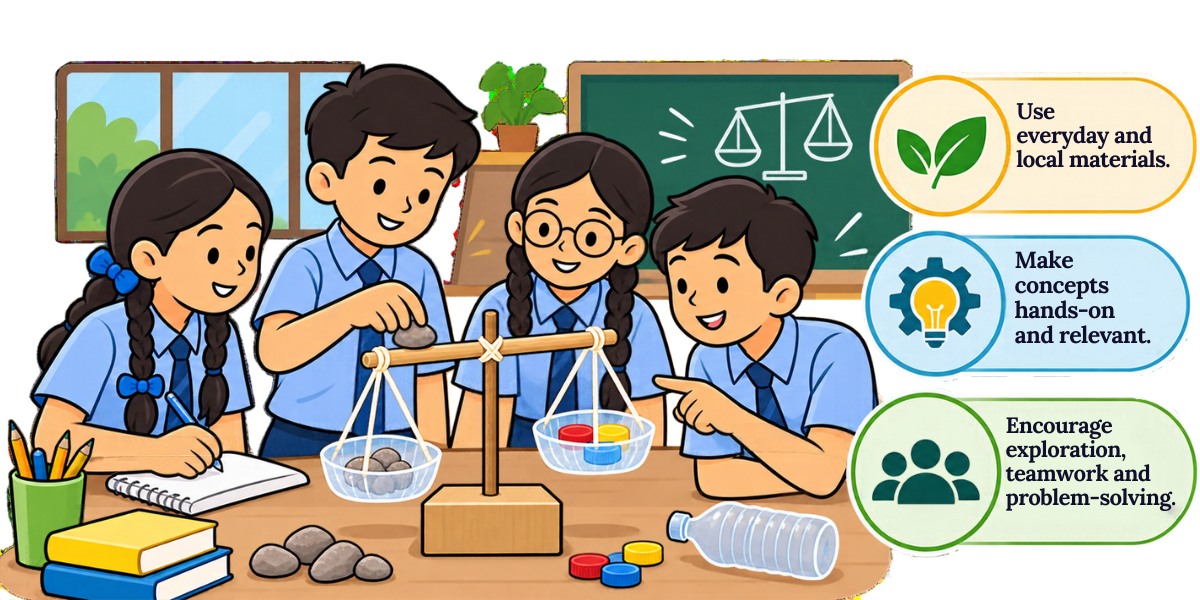
Schools can implement important NEP 2020 practices without waiting for major infrastructure upgrades. Everyday materials can support experiential learning. Teachers can use leaves, seeds, stones, measuring tools, recycled objects, local maps, and community examples to explain concepts.
Schools may collaborate with education departments, local institutions, community organisations, NGOs, and CSR partners to access resources, teacher development opportunities, learning materials, or specialist support.
How Can Schools Measure the Progress of NEP 2020 Implementation?
A balanced review should include evidence of classroom practice, student participation, learning progress, and teacher development.
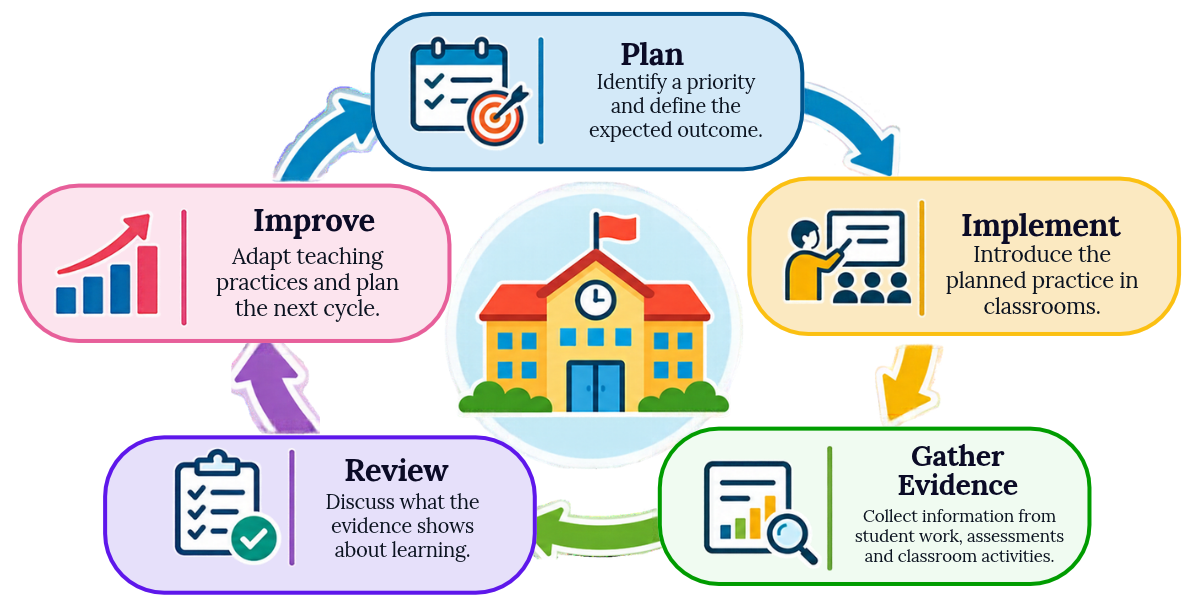
A regular review cycle helps schools make implementation more sustainable.
Plan → Implement → Gather Evidence → Review → Improve
Conclusion: From NEP 2020 Policy to Classroom Practice
Implementing NEP 2020 in schools is a gradual process that requires clear priorities, effective planning, teacher support, and a sustained focus on student learning. Schools do not need to introduce every reform at once.
The success of implementation should be measured not only by the activities schools introduce but also by the learning experiences students receive.