Vocational Education in Schools: Preparing Students for Future Careers
A student may understand a science concept in class but struggle to apply it to a real-life problem. Another may enjoy designing, repairing, organizing, or building things but have few opportunities to explore these interests through formal learning.
These situations raise an important question for schools: Are students learning only to answer questions, or are they also learning how to apply their knowledge?
Vocational education helps bridge this gap. By combining academic learning with practical activities, career exploration, and skill development, a vocational education programme helps students connect classroom concepts with real-world situations.
India’s National Education Policy (NEP) 2020 recognizes the importance of vocational education in mainstream schooling. The challenge for schools is to create meaningful learning experiences that help students develop practical competencies, explore career possibilities, and make informed choices about their future.
What Is Vocational Education in Schools?
Vocational education in schools helps students develop practical knowledge and skills related to different occupations, industries, and areas of work. It connects classroom learning with real-world applications through projects, demonstrations, and exposure to different career pathways. Rather than replacing academic subjects, it complements them by showing students how knowledge can be applied in practical situations.
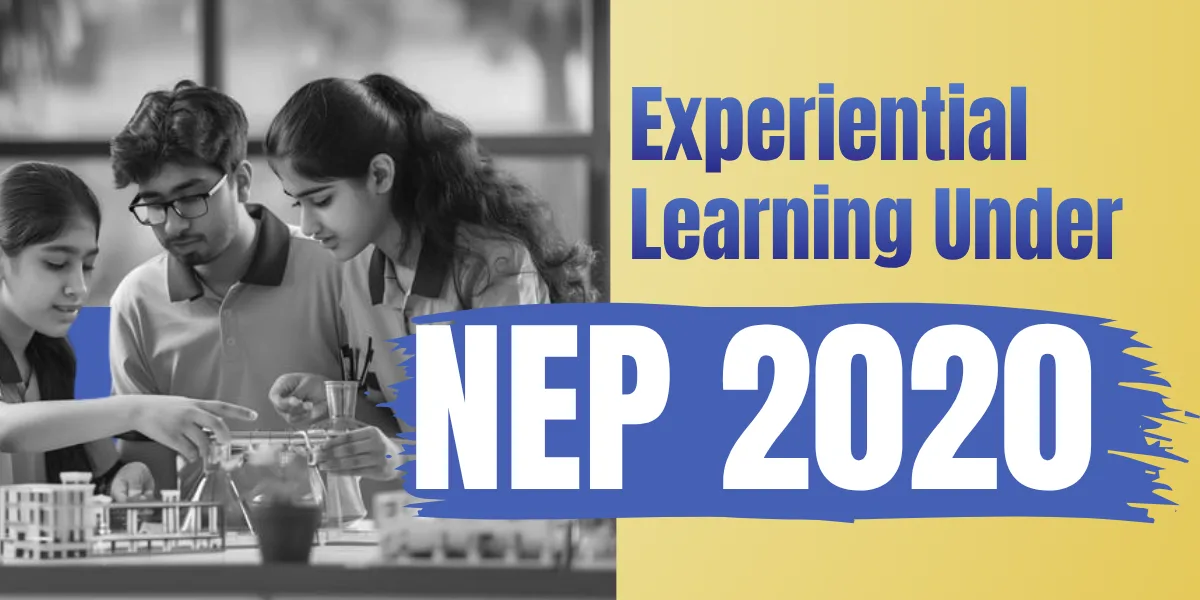
For example, students learning about electricity could explore how a simple circuit works and identify its components. Similarly, a mathematics lesson could involve preparing a budget or calculating the cost of materials for a school project.
How Is Vocational Education Different from Academic Learning?
Academic learning develops conceptual understanding and theoretical knowledge, while vocational learning focuses on applying knowledge to practical tasks and developing occupational skills. Both approaches are important because students need to understand concepts and learn how those concepts can be used.
| Learning approach | Primary focus | Example |
|---|---|---|
| Academic learning | Understanding concepts and theories | Learning mathematical concepts |
| Vocational learning | Applying knowledge to practical tasks | Using calculations to prepare a budget |
| Skill-based learning | Developing transferable abilities | Practising communication, teamwork, and problem-solving |
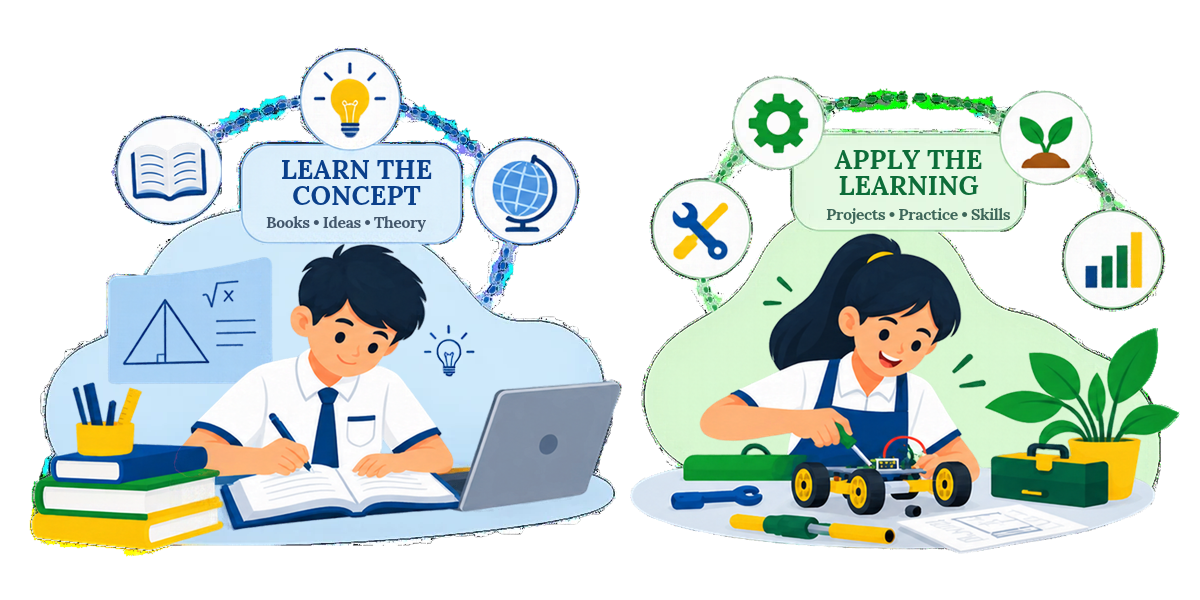
These approaches often overlap. A well-designed vocational education programme combines academic concepts, practical activities, and transferable skills rather than treating them as separate parts of a student's education.
Why Is Vocational Education Important for Students Today?
Vocational education helps students connect classroom learning with practical applications, explore their interests, and develop skills that support further education and career preparation. It can also make learning more relevant by helping students understand how different occupations work. Its effectiveness depends on the quality of instruction, practical exposure, and opportunities students receive to practise and improve.
1. It Connects Classroom Learning with Real-World Applications
Hands-on activities allow students to experiment, make decisions, identify mistakes, and improve their approach. For instance, students studying environmental science could design a basic water-conservation model for their school, combining science, measurement, teamwork, and problem-solving.
2. It Builds Transferable Skills
Vocational learning can help students develop competencies that are useful across different educational and career pathways, including:
- Problem-solving: Identifying challenges and testing solutions.
- Communication: Explaining ideas and presenting work.
- Collaboration: Working with others to complete tasks.
- Digital literacy: Using technology responsibly and effectively.
- Time management: Planning tasks and meeting deadlines.
- Adaptability: Responding feedback and changing requirements.
These skills also support classroom participation, group projects, and higher education.
3. It Encourages Career Awareness
Students may be familiar with only a limited range of professions. Vocational education can introduce them to fields such as information technology, agriculture, finance, design, hospitality, and technical trades.
Early exposure helps students recognise their interests and understand different career possibilities without requiring them to make premature career choices.
4. It Supports Inclusive Learning
Students have different strengths, interests, and ways of learning. Practical activities can provide additional opportunities to demonstrate understanding through experimentation, making, observation, and collaboration.
Schools should make vocational learning accessible regardless of gender, disability, socioeconomic background, or academic performance. The aim is to expand opportunities for all learners, not to create separate or lower-status educational pathways.
5. It Supports Further Education and Career Preparation
Vocational education can help students understand the knowledge, qualifications, and practical competencies associated with different career pathways. Depending on the course and its recognition, it may support progression to further vocational training, professional certifications, or higher education.
However, vocational education does not automatically guarantee employment or a particular salary.
Outcomes depend on training quality, student proficiency, recognised qualifications, local opportunities, and the wider employment environment.
How Does NEP 2020 Promote Vocational Education in Schools?
The National Education Policy (NEP) 2020 aims to integrate vocational education into mainstream schooling, connecting academic learning with practical skills, career awareness, and respect for the dignity of labour. Chapter 16 outlines key recommendations for early vocational exposure, phased implementation, and structured skill development.
Key provisions include:
- Paragraph 16.4: Recommends early vocational exposure and phased integration into mainstream education.
- Paragraph 16.5: Sets a policy target for at least 50% of learners across school and higher education to have vocational education exposure by 2025. This is a policy target, not confirmation that it was achieved.
- Paragraph 16.6: Recommends phased implementation informed by skills gaps and local opportunities.
- Paragraph 16.8: Calls for further development of the National Skills Qualifications Framework (NSQF).
Schools can translate these recommendations into practice through age-appropriate activities, curriculum alignment, teacher preparation, and opportunities for students to learn from vocational experts. The specific courses and delivery arrangements should follow the requirements of the relevant education board and state.
How Does Samagra Shiksha and CBSE Support Vocational Education?
The Government of India's Samagra Shiksha framework integrates vocational learning with academic education in government and government-aided schools, including vocational exposure for middle-school learners and NSQF-compliant courses for Classes IX–XII.
For the 2026–27 academic session, CBSE lists Kaushal Bodh for Classes VI–VIII and Vocational Education (Kaushal Vikas) for Class IX as mandatory skill education. These initiatives provide schools with a framework for introducing practical learning, strengthening teacher readiness, and connecting classroom concepts with real-world skills. Refer to the official CBSE Skill Education Curriculum for details.
How Is Vocational Education Preparing Students for the Future of Work?
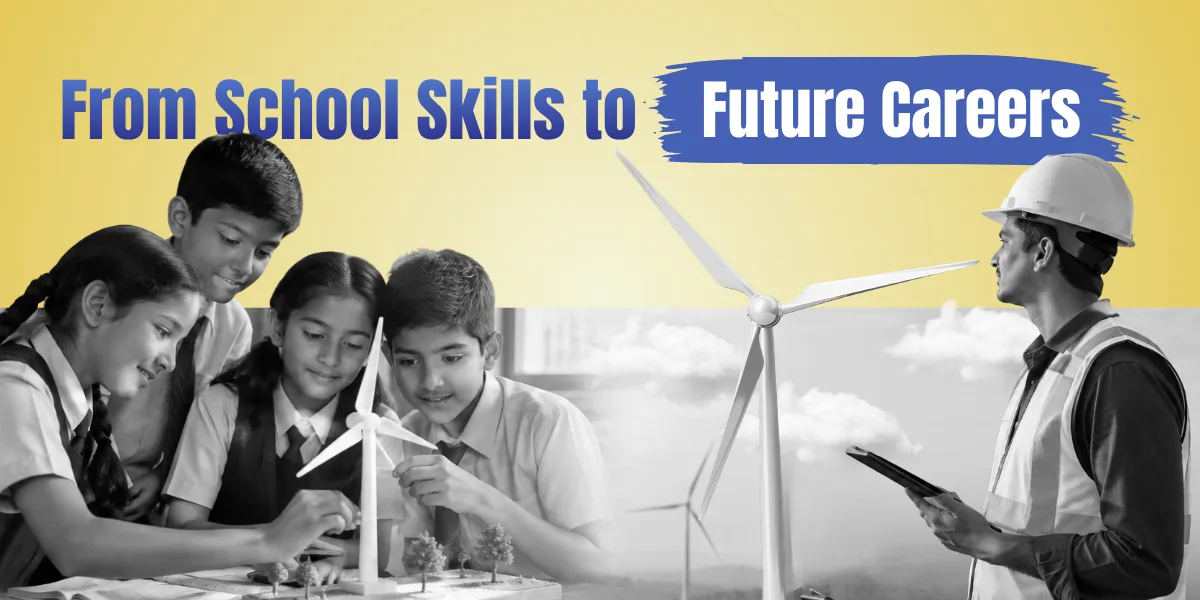
Vocational education can help students prepare for changing workplaces by developing digital literacy, critical thinking, adaptability, and practical problem-solving. As technologies and industries evolve, students need opportunities to apply knowledge, work with different tools, and learn how to respond to unfamiliar challenges.
The UNESCO Strategy for Technical and Vocational Education and Training (TVET) 2022–2029 highlights the role of skills development in supporting employment, decent work, and transitions towards more digital, green, and inclusive economies.
For schools, this means helping students develop the ability to keep learning and adapt their skills, rather than preparing them only for a fixed set of tasks.
Which Future Skills Can Students Develop?
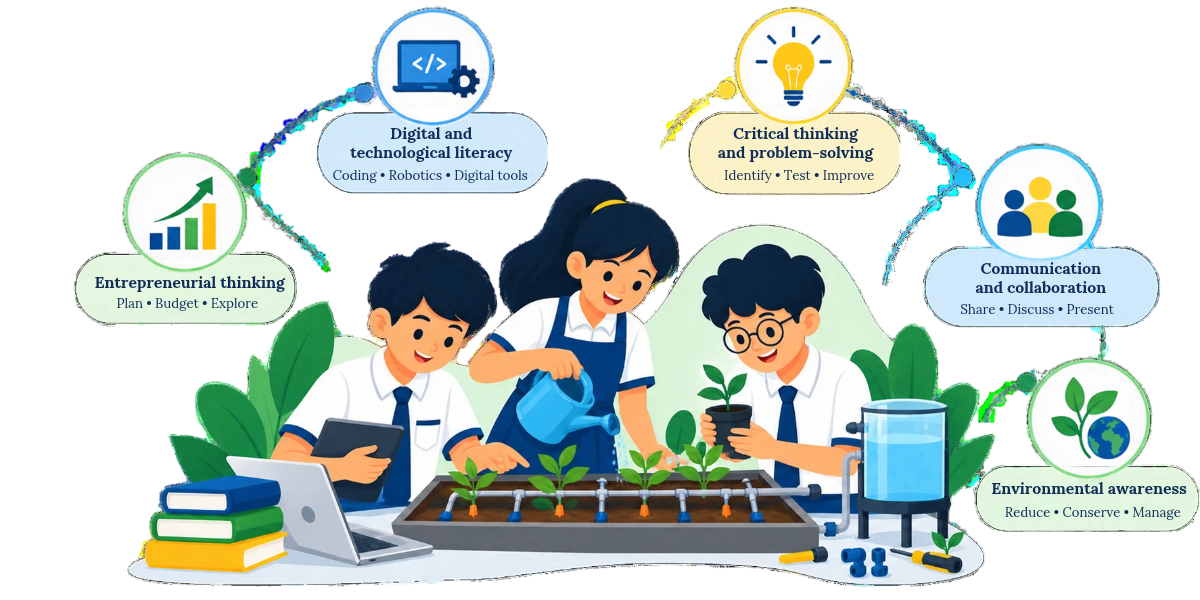
- Digital and technological literacy: Exploring coding, robotics, digital tools, and introductory artificial intelligence concepts.
- Critical thinking and problem-solving: Identifying problems, testing solutions, and evaluating results.
- Communication and collaboration: Sharing responsibilities, explaining decisions, and presenting work.
- Entrepreneurial thinking: Exploring budgeting, resource management, and customer needs through simple projects.
- Environmental awareness: Applying practical skills to waste reduction, gardening, energy conservation, and water management.
Example: Applying Skills to a Real-World Challenge
Imagine students designing a basic irrigation model for a school garden. They would need to understand plant requirements, measure materials, plan the model, work together, and test whether their design distributes water effectively.
This activity combines science with practical application, planning, teamwork, and evaluation. Students also learn that designs may need improvement after testing, helping them understand how observation and feedback support problem-solving.
What Vocational Skills and Career Pathways Can Students Explore?
The vocational skills students explore should reflect their age, interests, curriculum, local opportunities, and available resources. Schools can introduce broad learning areas in the middle grades and provide more structured career exploration as students progress. The following examples are illustrative, not a prescribed national list of courses.
| Vocational area | Example learning activities | Skills students can explore |
|---|---|---|
| Technology and computing | Introductory coding and digital projects | Logical thinking, digital literacy |
| AI and robotics | Building and testing simple models | Design, experimentation, problem-solving |
| Agriculture and environment | School gardening or water conservation | Observation, resource management |
| Finance and entrepreneurship | Preparing a budget or simple business plan | Numeracy, planning, decision-making |
| Design and multimedia | Creating posters or digital presentations | Creativity, communication |
| Retail and hospitality | Simulated customer-service activities | Communication, organisation, teamwork |
| Technical trades | Age-appropriate demonstrations of tools and materials | Measurement, safety awareness |
| Healthcare awareness | Learning about hygiene and basic health practices | Responsibility, observation |
Practical activities must be age-appropriate and supervised. Tasks involving electrical equipment, machinery, chemicals, or healthcare procedures require appropriate expertise and safety measures.
Schools should also avoid presenting career pathways as fixed choices. The purpose of early vocational exposure is to broaden students' understanding and help them make informed choices over time.
How Can Schools Implement Vocational Education Effectively?
Effective vocational education requires clear learning outcomes, curriculum alignment, prepared teachers, practical activities, and continuous assessment. Schools can begin with available resources, identify gaps, and expand their programmes gradually instead of introducing too many activities at once.
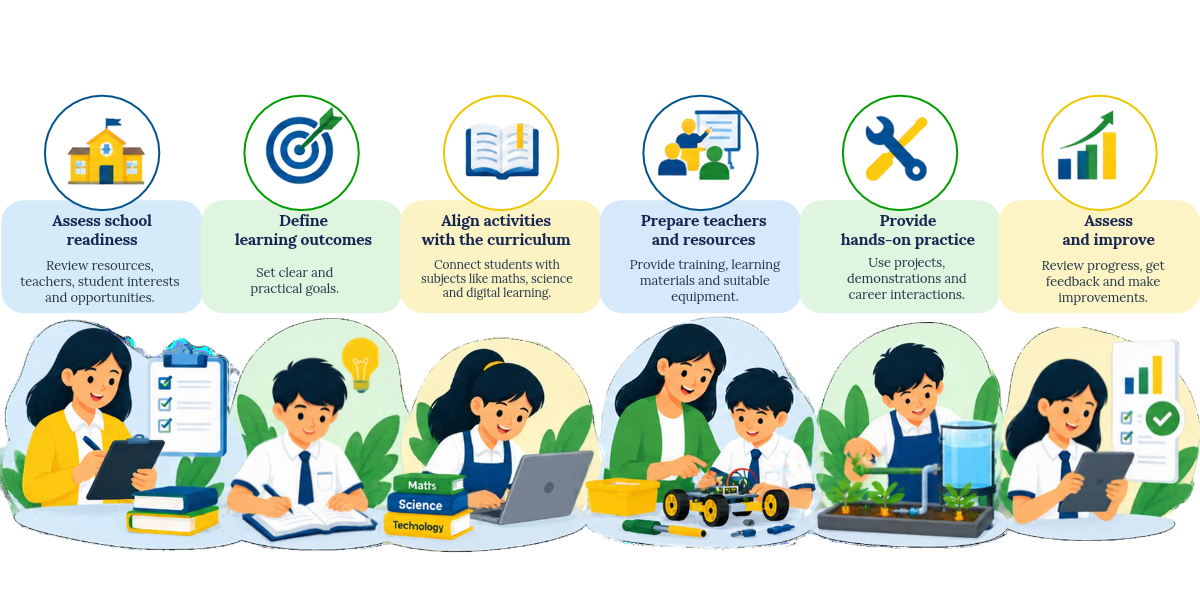
Six Steps to Implement Vocational Education
1. Assess school readiness. Review infrastructure, teacher capabilities, student interests, and local opportunities. Start with low-cost projects and demonstrations where resources are limited.
2. Define learning outcomes. Set specific goals, such as preparing a budget, designing a model, or solving a practical problem.
3. Align activities with the curriculum. Connect vocational projects with subjects such as mathematics, science, and digital learning to reinforce classroom concepts.
4. Prepare teachers and resources. Provide teacher training, learning materials, suitable equipment, and access to vocational experts where needed.
5. Provide hands-on practice. Use projects, demonstrations, supervised workshops, and career interactions to help students apply knowledge.
6. Assess and improves. Review student work, learning outcomes, and feedback to identify gaps and improve future activities.
A Practical Planning Framework: SCOPE
Schools can use the following SCOPE framework as a concise planning checklist. It is a proposed planning tool, not an official government framework.
| Element | Practical action |
|---|---|
| S – School readiness | Review available resources and support needs. |
| C – Curriculum alignment | Define learning outcomes and connect activities with subjects. |
| O – Opportunities for practice | Plan practical projects and expert interactions. |
| P – Prepared educators | Provide training and teaching resources. |
| E – Evaluation and evolution | Review student progress, feedback, and areas for improvement. |
Using this framework, school leaders can identify priorities, begin with manageable activities, and expand the programme as resources and teacher capacity develop.
How Can Schools Assess Vocational Skills and Learning Outcomes?
Schools can assess vocational learning by observing how students apply knowledge, complete practical tasks, solve problems, and explain their decisions. A balanced approach combines written assessments with practical demonstrations, project work, and teacher observation to evaluate conceptual understanding and real-world skill application.
Teachers can also use portfolios, self-assessments, and peer feedback to track progress. Clear assessment criteria help evaluate practical skills, teamwork, problem-solving, safety, and the ability to improve work based on feedback. This enables teachers to identify learning gaps and provide targeted support.
How Should Schools Evaluate Programme Effectiveness?
Student assessment examines what an individual learner understands or can do, while programme evaluation helps schools determine whether the overall learning experience is effective and accessible.
Schools can review student progress against learning outcomes, the quality of practical work, participation, teacher readiness, resource availability, and student feedback. These indicators help identify areas for improvement, but they should not be treated as evidence of employment outcomes without reliable follow-up data.
Conclusion: Making Vocational Education Meaningful for Every Student
Vocational education should go beyond introducing courses and activities. It should help students apply knowledge, develop practical skills, explore career pathways, and adapt to a changing world.
Aligned with the vision of NEP 2020, schools can make vocational learning meaningful through practical experiences, trained teachers, inclusive opportunities, and continuous assessment.
TG Gurukul supports schools in building these learning experiences through its Vocational Education (Skill Building) Programme for Grades 6–12.
Explore the TG Gurukul Vocational Education Programme to help students build practical skills, confidence, and adaptability to navigate their future.
Key Takeaways: Vocational Education in Schools
Vocational education helps schools connect academic learning with practical application, skill development, and career awareness. Its value depends on the quality of implementation, and the opportunities students receive to practise their skills.
- Integrate practical learning with academics: Show students how classroom concepts apply in real situations.
- Introduce career exploration early: Help students discover different fields without pressuring them to choose a career prematurely.
- Align implementation with NEP 2020: Use relevant policy recommendations and applicable curriculum requirements to guide planning.
- Focus on transferable skills: Develop communication, collaboration, digital literacy, critical thinking, and problem-solving.
- Make learning inclusive: Ensure all students can access meaningful activities and explore diverse career pathways.
- Prepare teachers and provide suitable resources: Strengthen educators' ability to deliver and assess practical learning.
- Measure learning, not just participation: Use demonstrations, projects, and feedback to understand what students can actually do.
- Improve programmes continuously: Use evidence from student work and classroom experiences to refine activities.
Upcoming Blogs
- Future-Ready Schools: How AI, Robotics, Vocational Education & Life Skills Prepare Students for 2030.
- How to Implement NEP 2020 in Schools: A Step-by-Step Guide
- NEP 2020 Implementation Challenges: What Schools Need to Address
- NEP 2020 for School Leaders: A Practical Guide for Principals and Administrators
- NEP 2020 School Readiness Checklist: Is Your School Prepared for the New Education Framework?